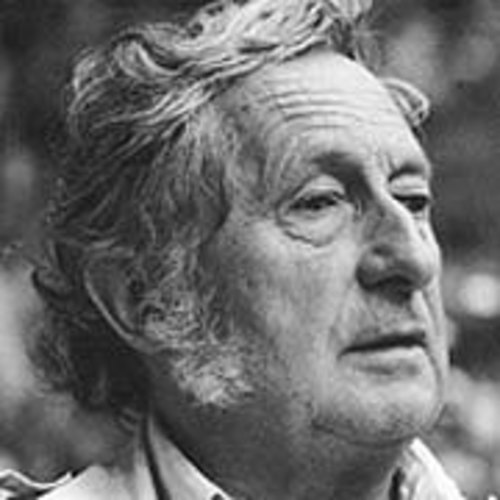
Werner Wittig
Land Still Life

12. September 2026 — 14. November 2026 | in the cabinet

Werner Wittig had chosen the colour woodcut as a special form of colour wood engraving, alongside oil painting, as his primary means of expression. Looking back, it is fair to say that he developed the woodcut much more decisively as a distinct visual language than he was able to do so with painting. His use of different printing blocks and softly toned printing inks, and the arrangement of motifs across different pictorial planes, lend these prints a poignant simplicity, something that, like nature poetry, feels both familiar and alienating at the same time. The etching of lines and hatching with the needle, on the other hand, imbues the wood, alongside its grain, with a second nature, as it were.

  • Werner Wittig – „Kühler Herbst“
    Wittig, Werner. – „Kühler Herbst”
  • Werner Wittig – „Gläser und Blumen“
    Wittig, Werner. – „Gläser und Blumen”
  • Werner Wittig – „Herbstlied“
    Wittig, Werner. – „Herbstlied”
  • Werner Wittig – „Apfel und Apfelblüte“
    Wittig, Werner. – „Apfel und Apfelblüte”
  • Werner Wittig – „Am Berg“
    Wittig, Werner. – „Am Berg”
  • Werner Wittig – „Wald und Feld“
    Wittig, Werner. – „Wald und Feld”
  • Werner Wittig – „Stillleben“
    Wittig, Werner. – „Stillleben”
  • Werner Wittig – „Abendstunde“
    Wittig, Werner. – „Abendstunde”
  • Werner Wittig – „Am Strand“
    Wittig, Werner. – „Am Strand”
  • Werner Wittig – „Herbstweise“
    Wittig, Werner. – „Herbstweise”
Werner Wittig

Werner Wittig

Details

Introduction

A striking feature of Werner Wittig’s art is the landscape still life, in which he combines the subject of the landscape with that of the still life. Sometimes the still life transforms into a landscape and takes on a monumental quality. At other times, the landscape becomes a perceived interior space in which elements of nature and architecture come together. In a kind of magical synthesis, the artist treats bushes, houses, vases, leaves and fruits as visually equivalent pictorial elements and brings them together on a stage as a poetic ›nature morte‹.