Introduction
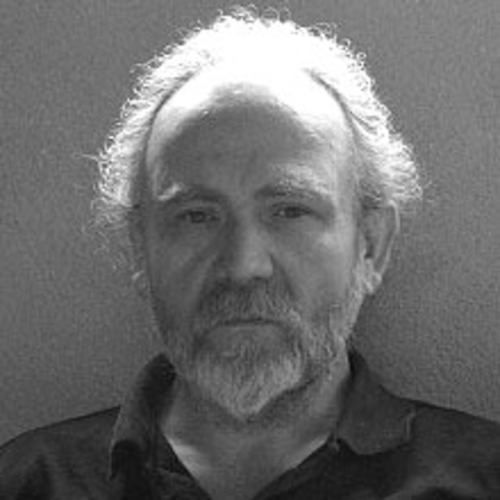
Andreas Wachter, born in 1951, grew up in the working-class district of Sonnenberg in Chemnitz. In 1974, as a trained sign and poster painter, he went to Leipzig to study painting at the Hochschule für Grafik und Buchkunst (Academy of Fine Arts and Book Arts) under Volker Stelzmann and Arno Rink. The solid, consistently technical training he received at the Leipzig Academy at that time, which focused entirely on figurative themes, became the foundation of his work. The art and painting history he learned during his studies also became an indispensable sounding board for his artistic thinking. Andreas Wachter intensively absorbed, internalized, and further developed the visual world of the great Leipzig figure painters, to whom he undoubtedly belongs, which for outsiders is like a secret library or a opulent fundus.
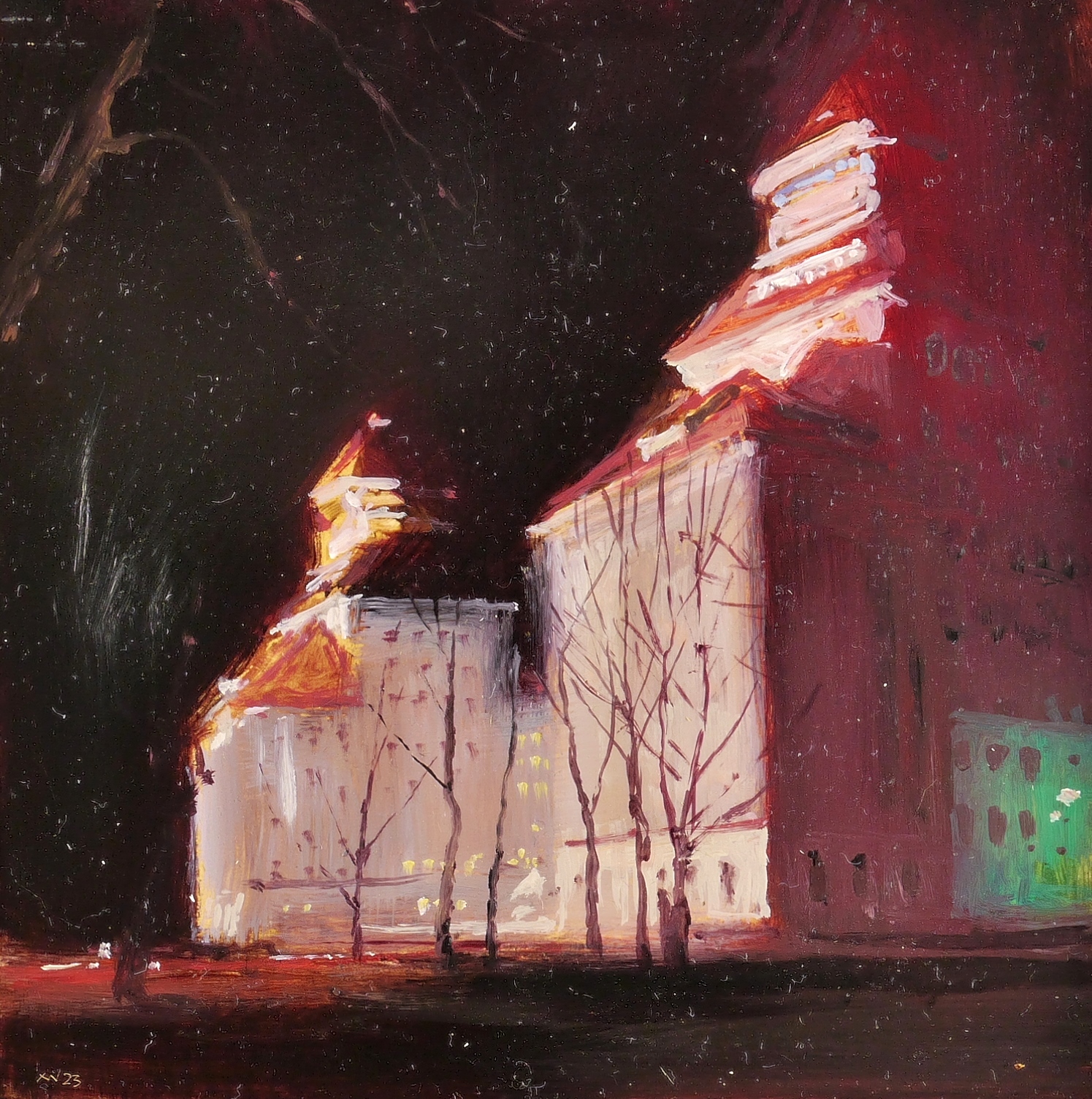
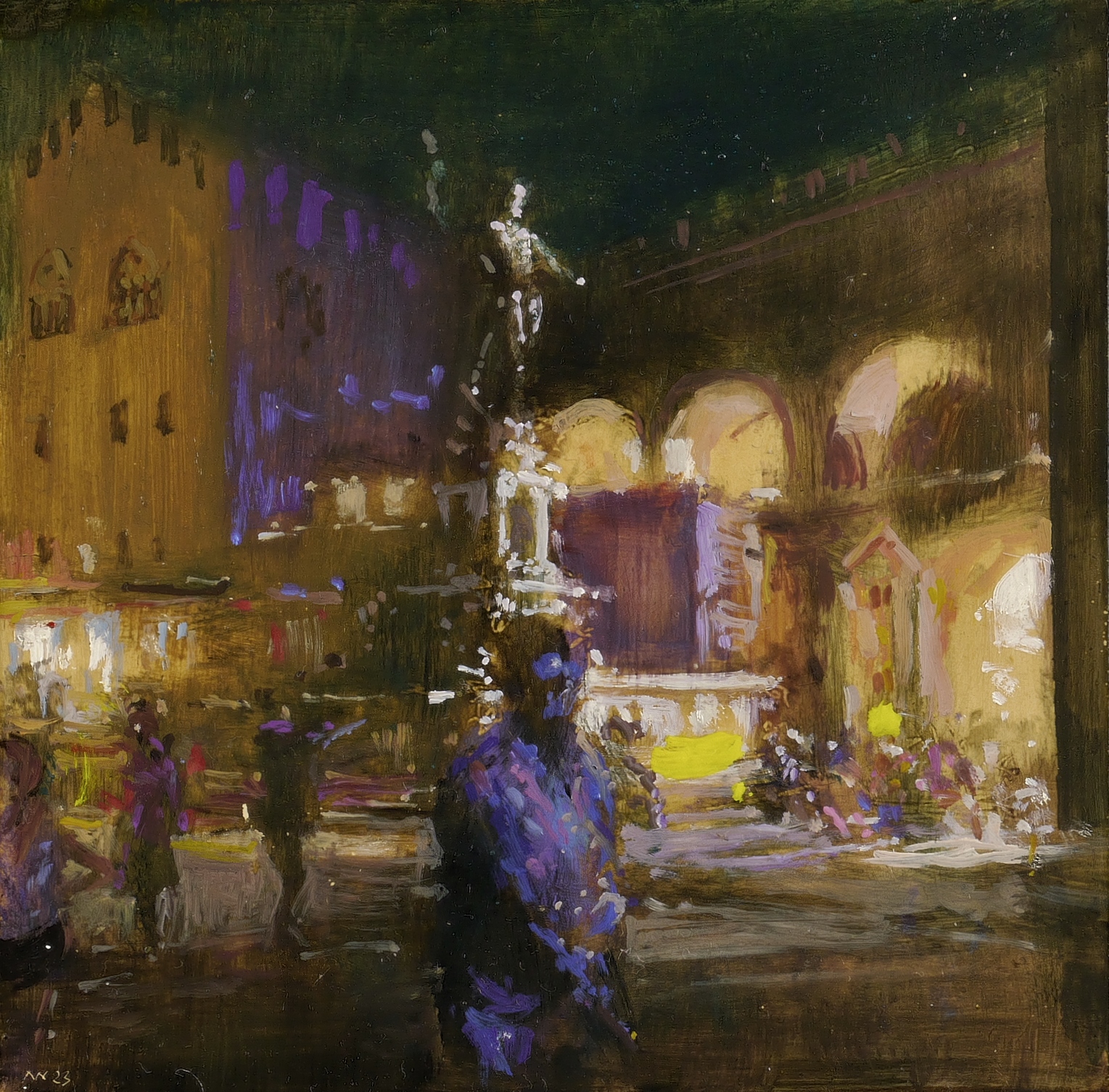
In the early 1980s, Andreas Wachter moved with his family to Erlln, a small village on the Freiberger Mulde river near the town of Colditz. There, over four decades, he developed a remarkable body of paintings, which has since been expanded to include sculptural works, mostly bronzes or colored terracottas, added since around 2005. Images of the Muldental valley are comparatively rare in his work. It almost seems as if the world offers more refuge than his home village on the river, whose apparent idyll was revealed by the power of nature just a few years ago. It is the unknown terrain that appeals to Andreas Wachter, encouraging him to look closely and inspiring him to create new images. His works take the viewer to New York, Venice, Siena, and Bologna, to the islands of Rügen and Sylt, or to the vast expanses of Iceland. Italy in particular became an important travel destination and a major source of inspiration for his artistic work after the fall of the Berlin Wall. Here, the omnipresent influence of antiquity, Mannerism, and Baroque on his art is formative.
Figures and landscapes are the central themes in Andreas Wachter's paintings. The focus on the painter's immediate surroundings, be it members of his family or the landscape around Erlln, can be understood as a substitute for models. It is as if, in this seemingly small slice of life, the whole miracle of existence shines through much more clearly than in many of the historical panoramas that have become a trademark for other Leipzig artists.
Paintings such as »Golfplatz« or »Faeden ziehen« remain deliberately unwieldy, thriving on a self-imposed mystery, and it is precisely this that makes them so appealing. The artist generally offers us no narrative as an explanation for a situation or group of figures. A narrative sequence of events thus only becomes apparent in fragments, and can be sensed rather than named. One could call it a »world-feeling«, an interweaving of the private and the social. A synthesis of condensed experiences from one's own life, stages of one's biography, their social and cultural references, one's own sensory experiences and self-observations against the backdrop of contemporary history. Andreas Wachter filters and bundles all these themes and then works out individual ones that are particularly relevant to him with the sharpness of a scalpel. In doing so, he does not play the role of a prophetic enlightener. His images do not clumsily address current issues at most, they allow associations, moods, or memories to flash by. They are timeless and thus capable of long-term survival.
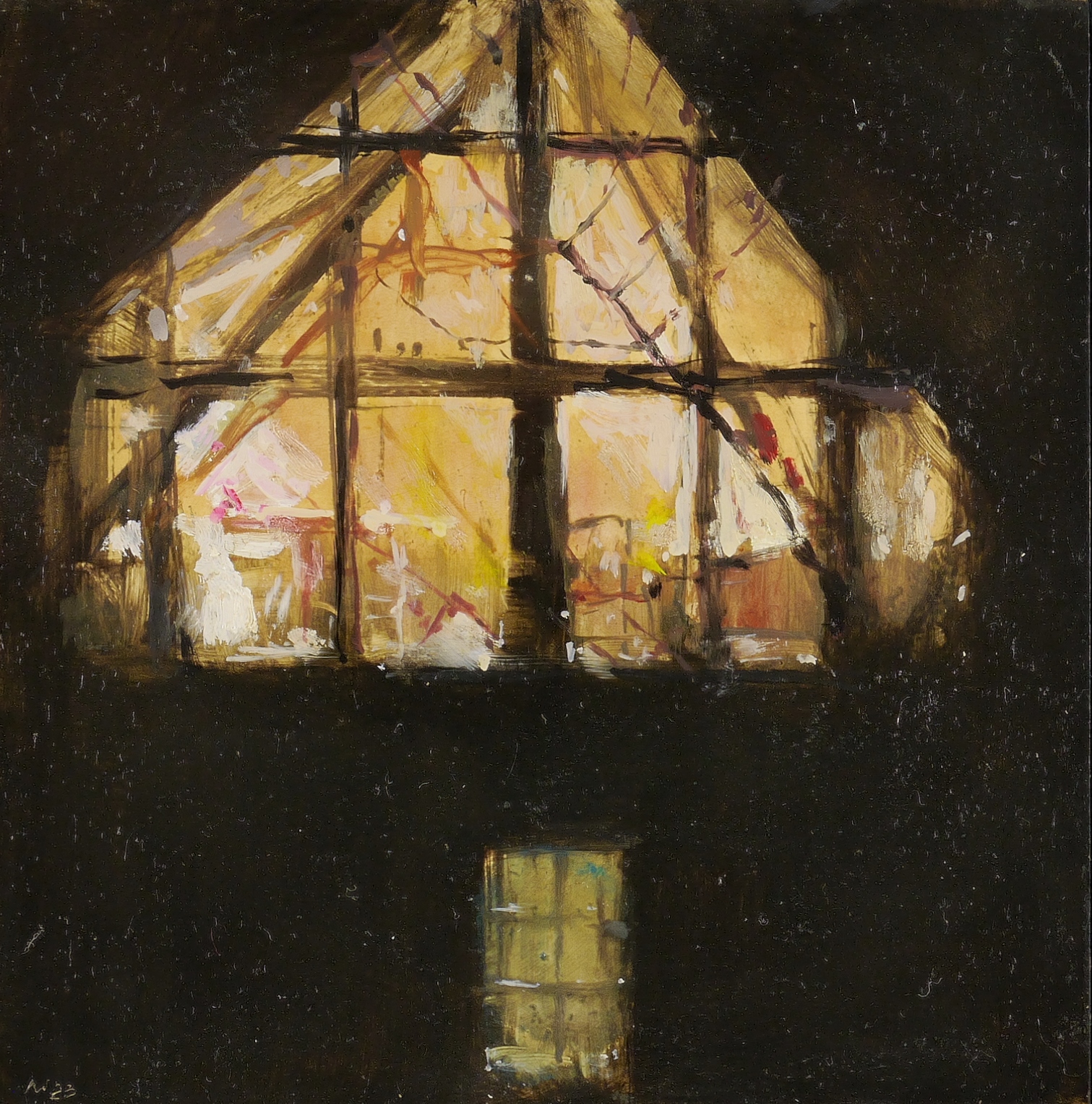
It is not only in his figurative paintings that the artist demonstrates his penchant for complexity. Landscape paintings such as »Morgen« or »Zicker« are imbued with melancholy and poetic beauty, while others, such as »Winterrand« or »Boerde«, convey a palpable sense of unease and oppressive gloom. These comparatively quiet and evocative works reveal the full range of tension inherent in his painting.
As an important bridge figure between the generations in Leipzig, Andreas Wachter has been able to maintain and assert his approach to painting. His artistic mastery is based on virtuosity in painting and drawing, an impressive understanding of space and color, light and dark, as well as an unwavering focus on the human figure and a passionate momentum that strikes and moves the viewer. In Andreas Wachter's paintings – be they programmatic images, family tableaux, everyday scenes, or landscapes of longing or the soul – it is moods that are shared, if anything. His paintings cannot be deciphered; they do not want to be emptied of meaning. Their secret is above all one thing: this wonderful, sensual, and virtuoso painting, celebrating the pictorial knowledge of centuries, always posing the question of illusion and reality.