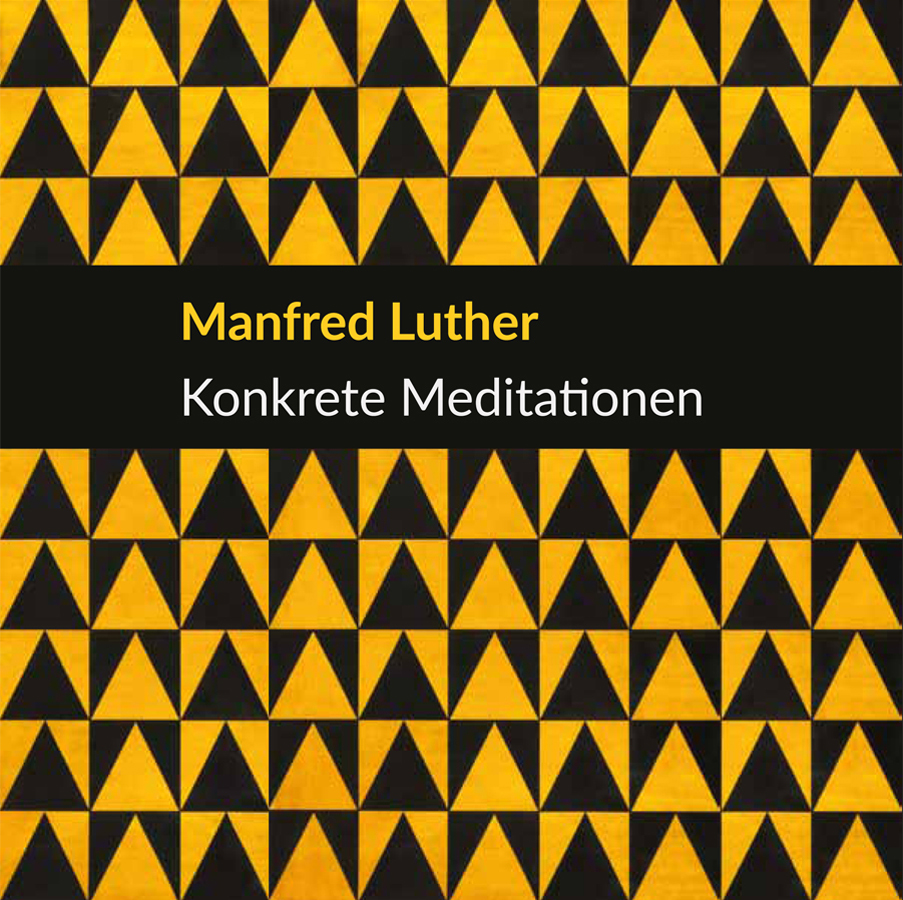
Manfred Luther
Concrete meditations

28. March 2024 — 08. June 2024

Like Carlfriedrich Claus, A.R. Penck and Gerhard Altenbourg, the constructive-concrete artist Manfred Luther was an exceptional figure in East German Modernism. He is regarded as the philosopher among the Dresden abstract artists surrounding Hermann Glöckner. At the beginning of his active artistic career in the late 1950s and early 1960s, he developed an artistic language that anticipated key developments in Western European and American art.

  • Manfred Luther – „Figur 20“
    Luther, Manfred. – Farbiger Epilog. – „Figur 20”
  • Manfred Luther – „Figur 22“
    Luther, Manfred. – Farbiger Epilog. – „Figur 22”
  • Manfred Luther – „Figur 17“
    Luther, Manfred. – Farbiger Epilog. – „Figur 17”
  • Manfred Luther – „Figur 15“
    Luther, Manfred. – Konkrete Zeichnungen II. – „Figur 15”
  • Manfred Luther – „Figur 23“
    Luther, Manfred. – Konkrete Zeichnungen II. – „Figur 23”
  • Manfred Luther – „Figur 18“
    Luther, Manfred. – Konkrete Zeichnungen II. – „Figur 18”
  • Manfred Luther – „Freut euch des Lebens I (Ringe und Keil)“
    Luther, Manfred. – Improvisationen. – „Freut euch des Lebens I (Ringe und Keil)”
  • Manfred Luther – „Freut euch des Lebens (Ringe Blau-Rot)“
    Luther, Manfred. – Improvisationen. – „Freut euch des Lebens (Ringe Blau-Rot)”
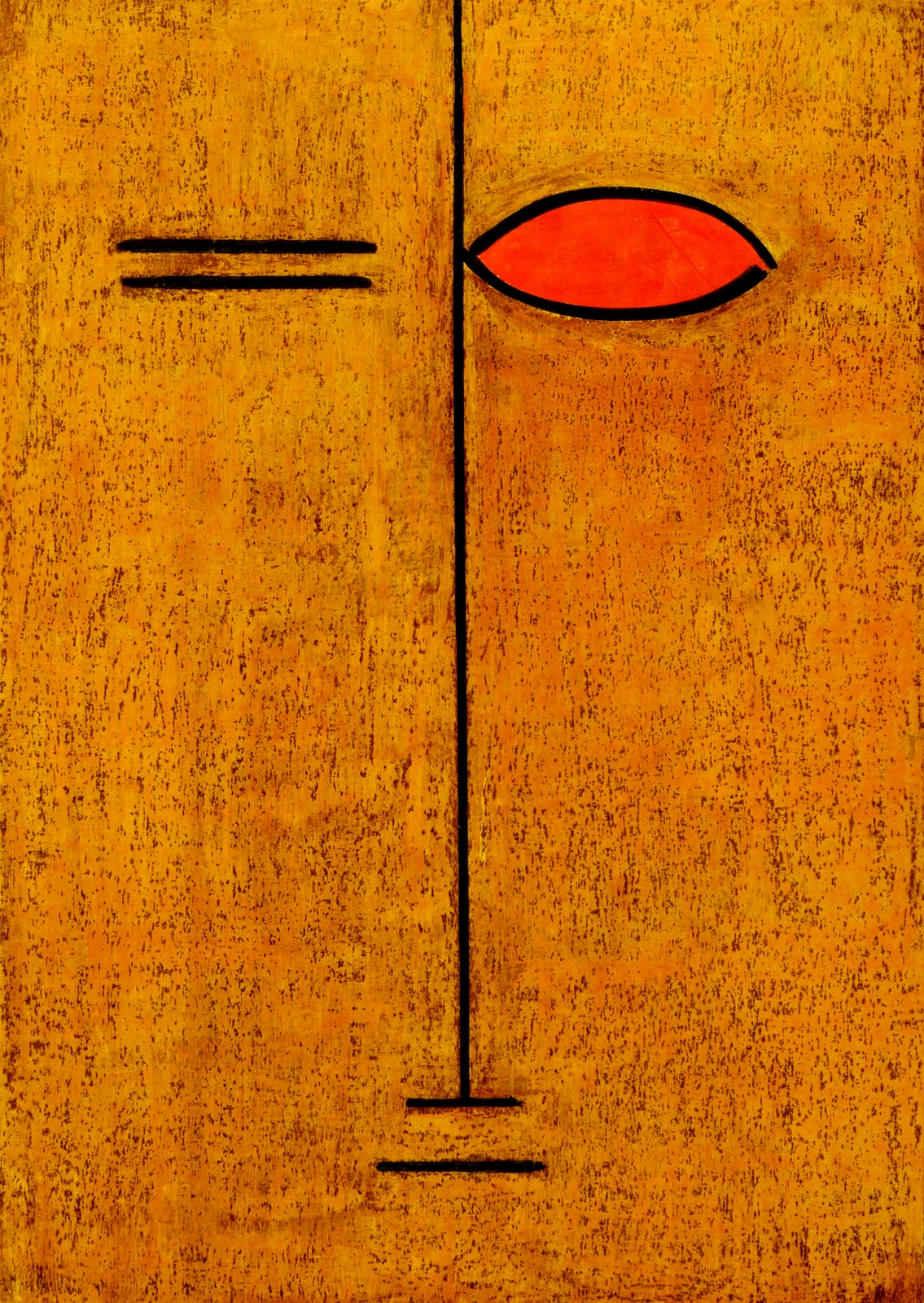
  • Manfred Luther – „Selbst (Schwarz auf Orange)“
    Luther, Manfred. – Gesichter. – „Selbst (Schwarz auf Orange)”
  • Manfred Luther – „Selbst (Schwarz und Rosa auf Magenta)“
    Luther, Manfred. – Gesichter. – „Selbst (Schwarz und Rosa auf Magenta)”
  • Manfred Luther – „Selbst (Rosa auf Blau)“
    Luther, Manfred. – Gesichter. – „Selbst (Rosa auf Blau)”
  • Manfred Luther – „Gesicht (Schwarz auf Weiß)“
    Luther, Manfred. – Gesichter. – „Gesicht (Schwarz auf Weiß)”
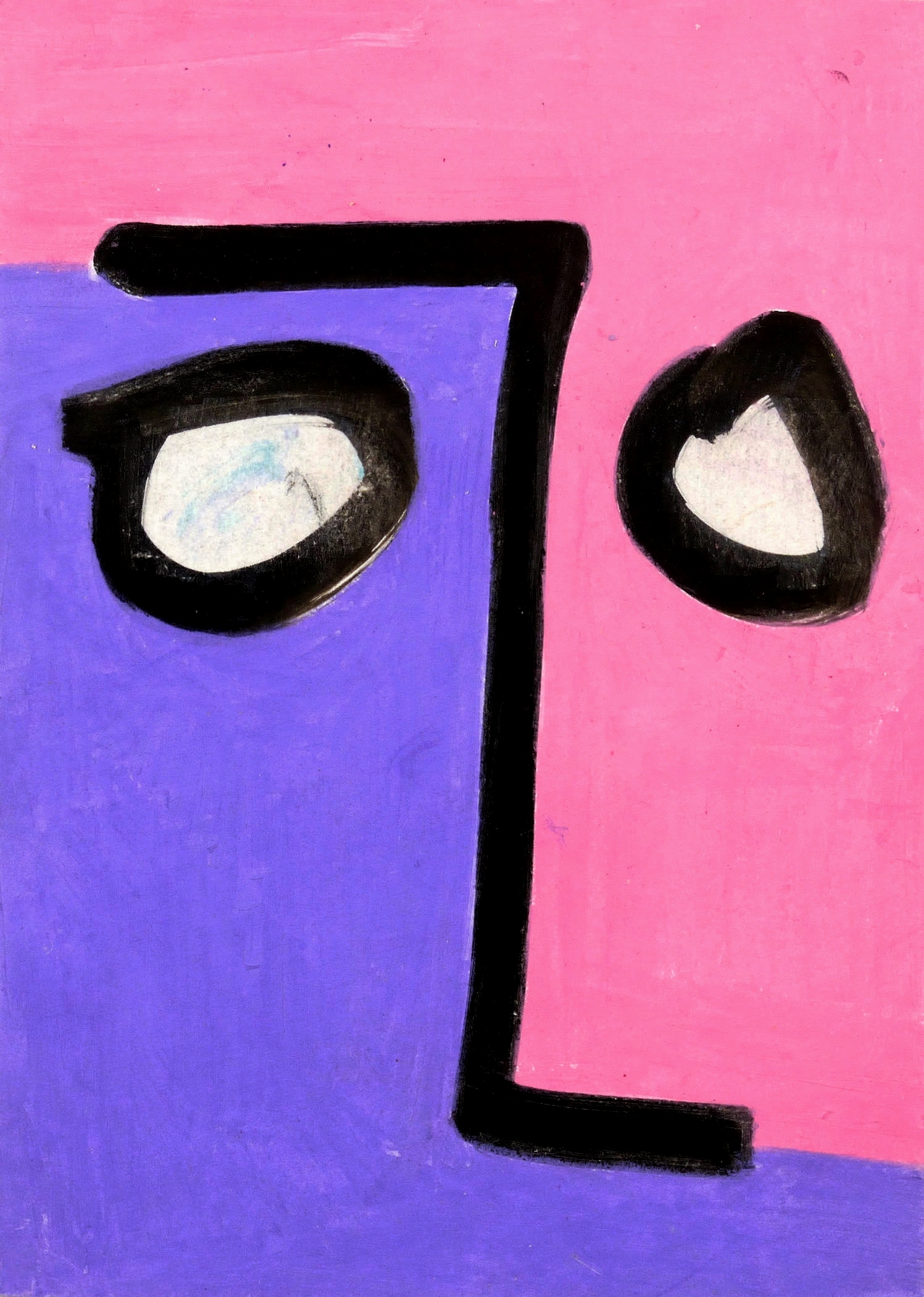
  • Manfred Luther – „Ohne Titel (Violett und Rosa)“
    Luther, Manfred. – Gesichter. – „Ohne Titel (Violett und Rosa)”
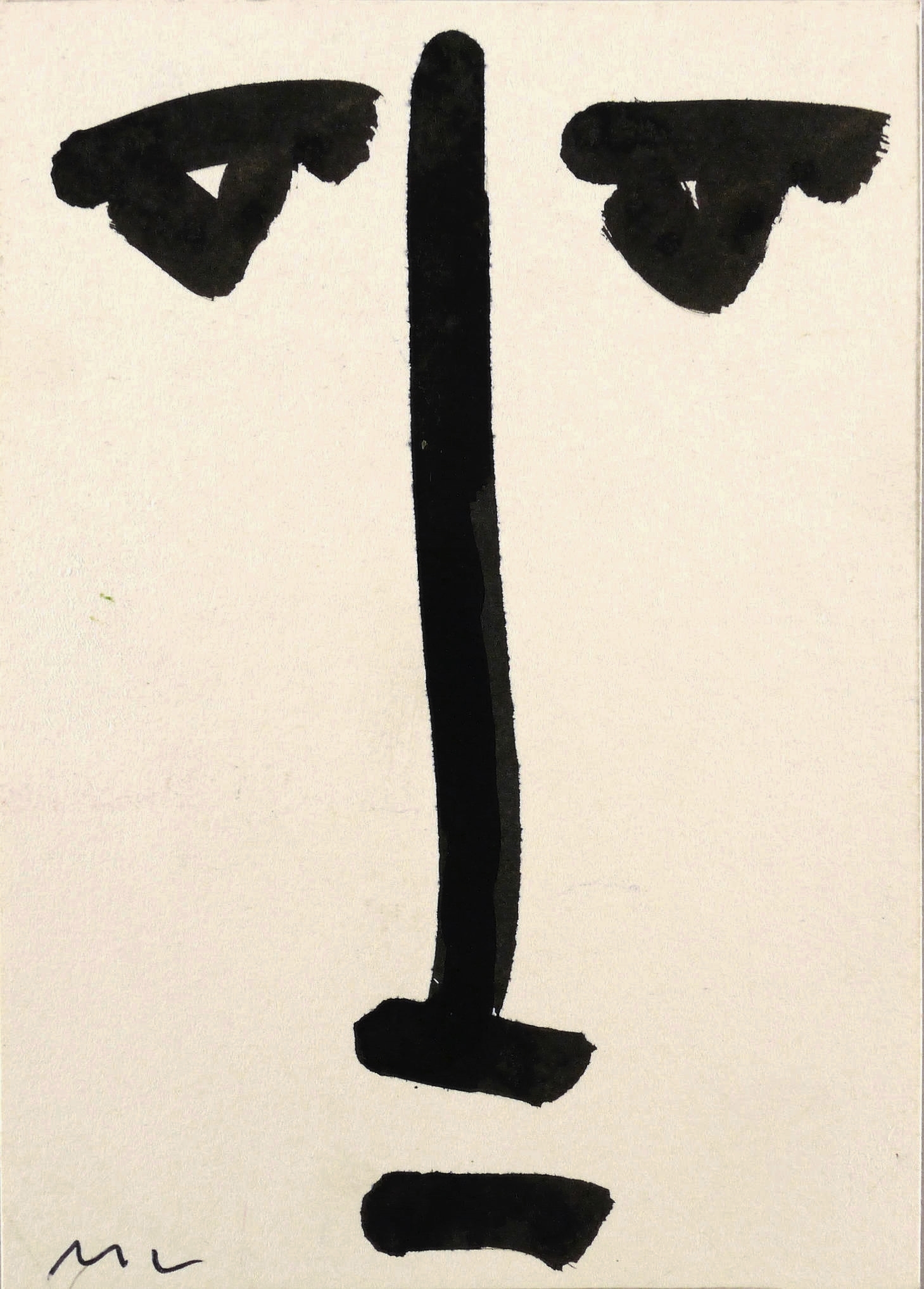
  • Manfred Luther – „Ohne Titel (Trauriges Gesicht I)“
    Luther, Manfred. – Gesichter. – „Ohne Titel (Trauriges Gesicht I)”
  • Manfred Luther – „Ohne Titel (Trauriges Gesicht III)“
    Luther, Manfred. – Gesichter. – „Ohne Titel (Trauriges Gesicht III)”
  • Manfred Luther – „Edel sei der Mensch (Kopf im Profil - Weiß auf Blau)“
    Luther, Manfred. – Gesichter. – „Edel sei der Mensch (Kopf im Profil - Weiß auf Blau)”
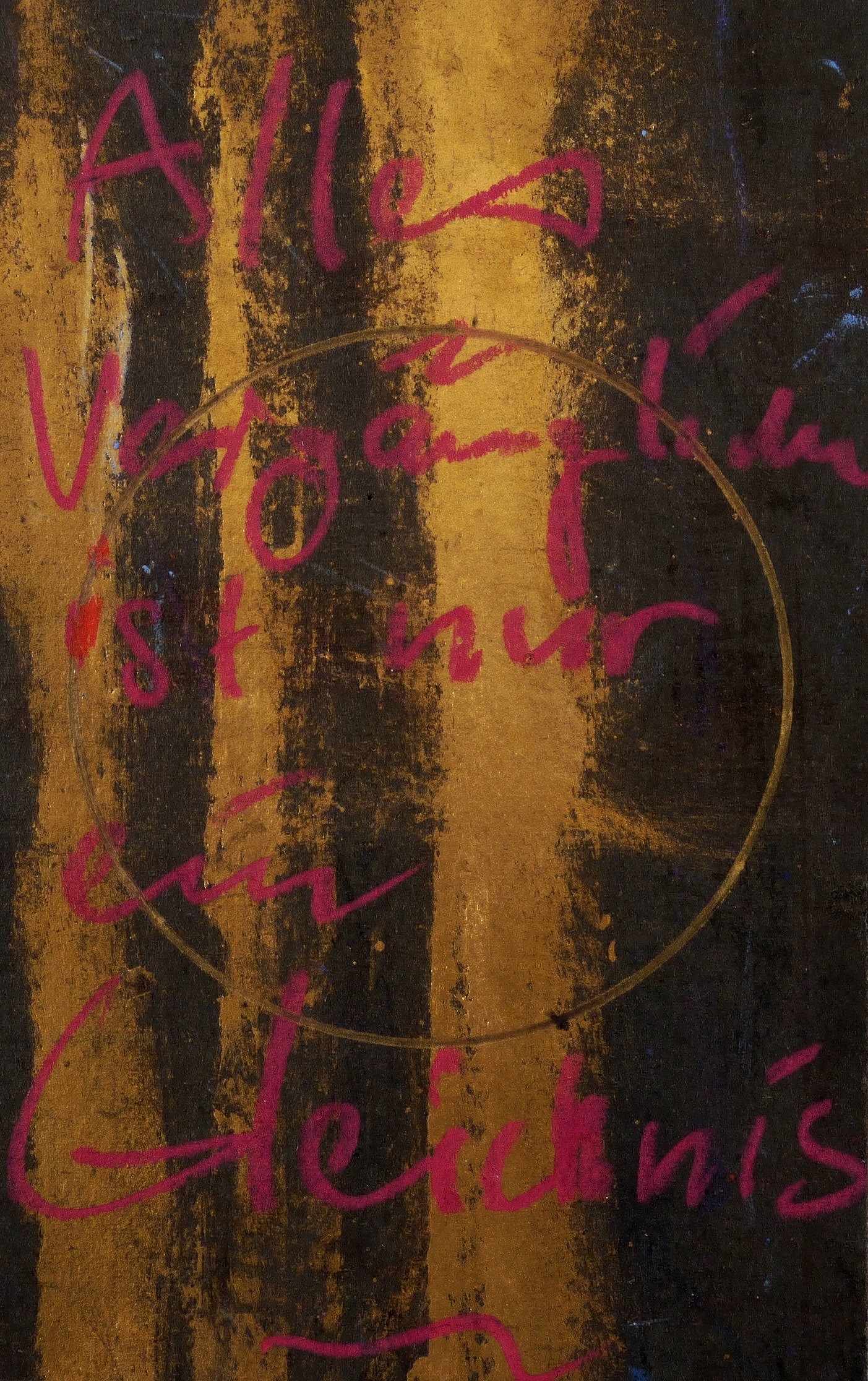
  • Manfred Luther – „Alles Vergängliche ist nur ein Gleichnis (Schwarz auf Gold)“
    Luther, Manfred. – Cogito ergo sum. – Scheibe. – „Alles Vergängliche ist nur ein Gleichnis (Schwarz auf Gold)”
  • Manfred Luther – „Alles Vergängliche ist nur ein Gleichnis (Gold über Schrift)“
    Luther, Manfred. – Cogito ergo sum. – Kreis. – „Alles Vergängliche ist nur ein Gleichnis (Gold über Schrift)”
  • Manfred Luther – „Alles Vergängliche ist nur ein Gleichnis (Gold auf Weinrot)“
    Luther, Manfred. – Cogito ergo sum. – Kreis. – „Alles Vergängliche ist nur ein Gleichnis (Gold auf Weinrot)”
  • Manfred Luther – „Alles Vergängliche ist nur ein Gleichnis (Gold auf Violett-Blau)“
    Luther, Manfred. – Cogito ergo sum. – Scheibe. – „Alles Vergängliche ist nur ein Gleichnis (Gold auf Violett-Blau)”
  • Manfred Luther – „Alles Vergängliche ist nur ein Gleichnis (Bronze auf Schwarzbraun)“
    Luther, Manfred. – Cogito ergo sum. – Kreis. – „Alles Vergängliche ist nur ein Gleichnis (Bronze auf Schwarzbraun)”
  • Manfred Luther – „Alles Vergängliche ist nur ein Gleichnis (Bronze auf Schwarz-Braun)“
    Luther, Manfred. – Cogito ergo sum. – Kreis. – „Alles Vergängliche ist nur ein Gleichnis (Bronze auf Schwarz-Braun)”
  • Manfred Luther – „Staub zu Staub (Schwarz über Graubraun)“
    Luther, Manfred. – Cogito ergo sum. – Kreis. – „Staub zu Staub (Schwarz über Graubraun)”
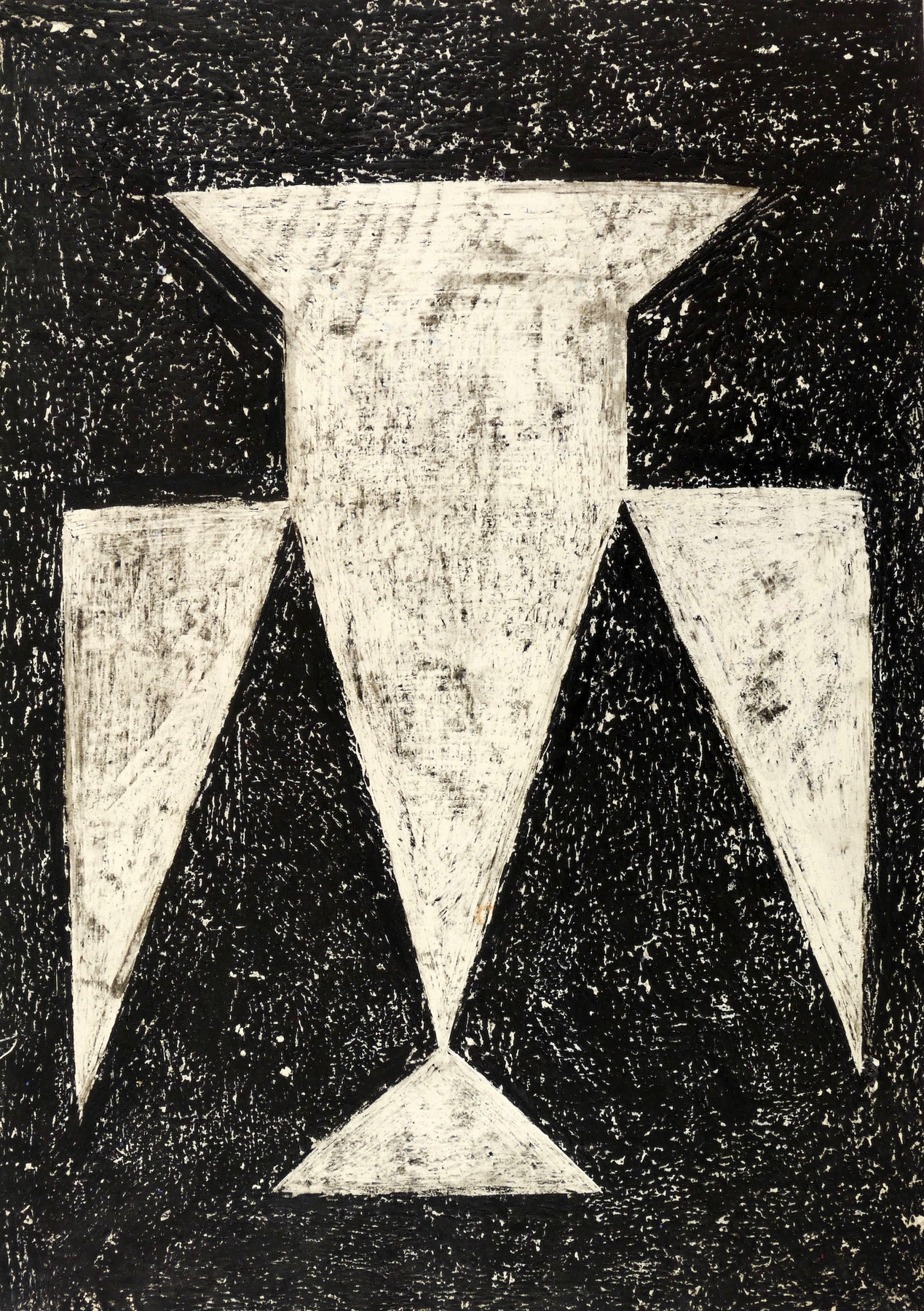
  • Manfred Luther – „Weiße Eule auf Schwarz“
    Luther, Manfred. – Figuren. – Eule. – „Weiße Eule auf Schwarz”
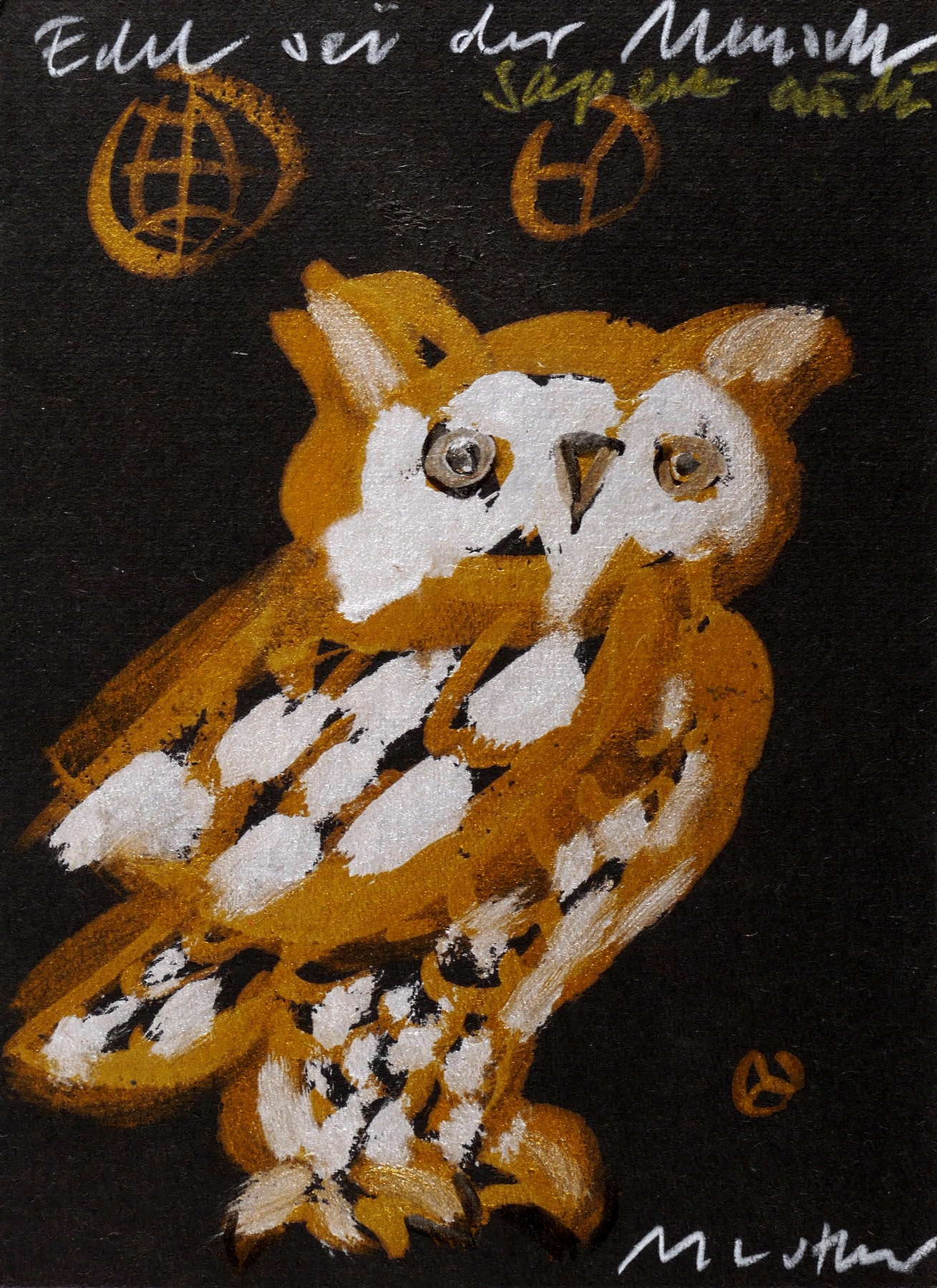
  • Manfred Luther – „Edel sei der Mensch (Eule mit Erde, Sonne und Mond)“
    Luther, Manfred. – Figuren. – Eule. – „Edel sei der Mensch (Eule mit Erde, Sonne und Mond)”
  • Manfred Luther – „Welttheater (Theatrum mundi)“
    Luther, Manfred. – Figuren. – Eule. – „Welttheater (Theatrum mundi)”
  • Manfred Luther – „Eule, verschachtelt“
    Luther, Manfred. – Figuren. – Eule. – „Eule, verschachtelt”
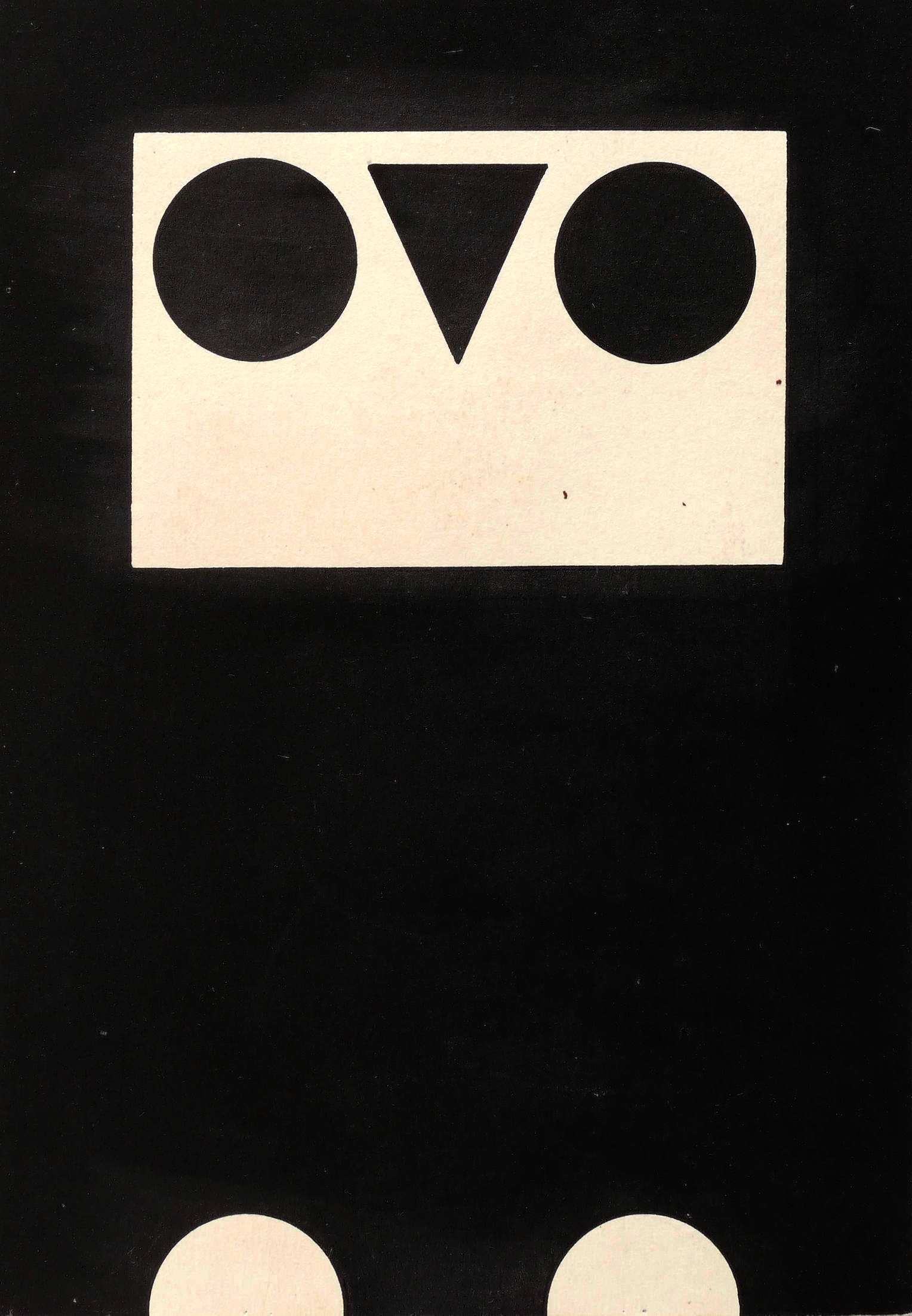
  • Manfred Luther – „Eule im Rechteck“
    Luther, Manfred. – Figuren. – Eule. – „Eule im Rechteck”
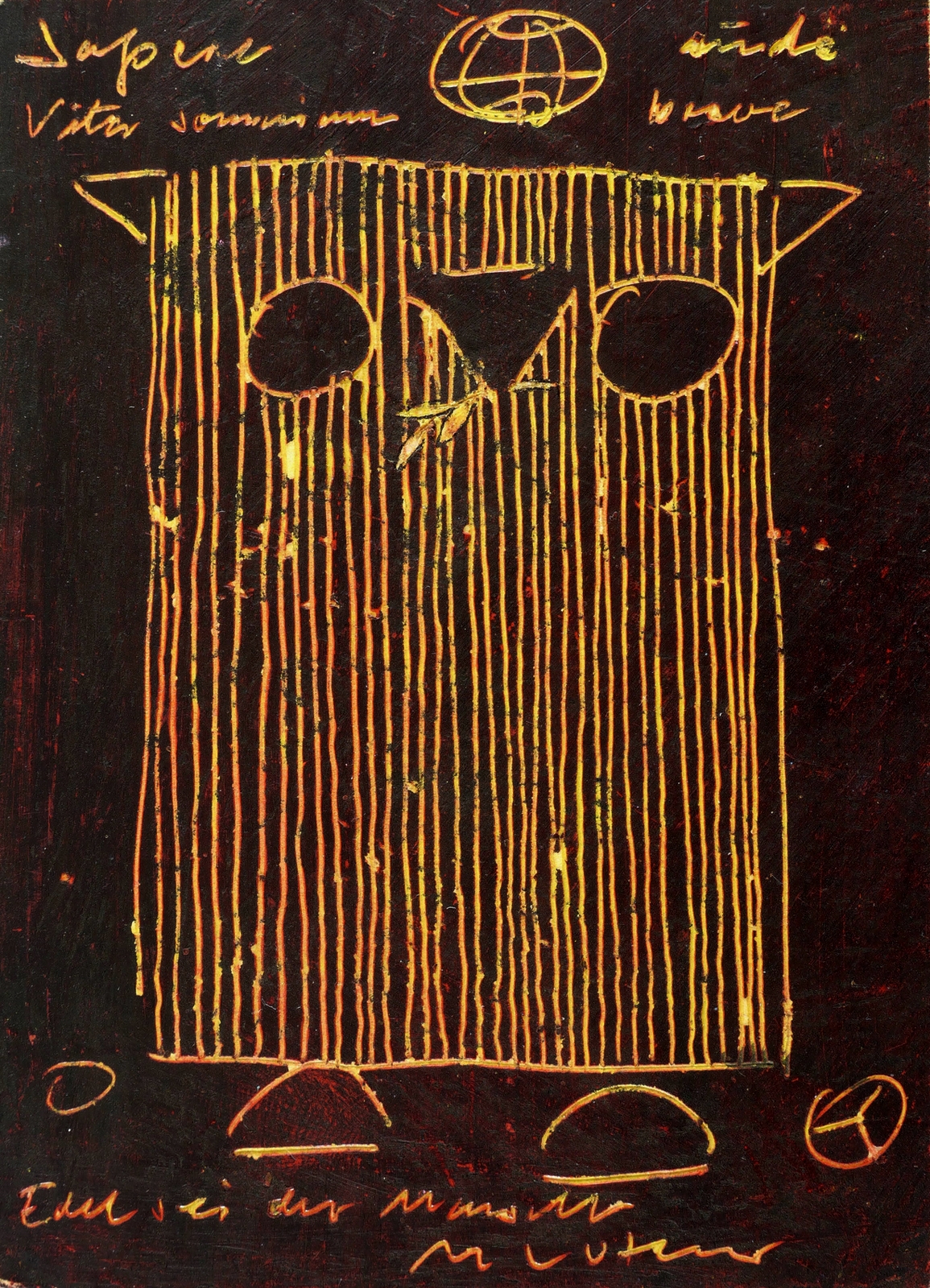
  • Manfred Luther – „Eule mit Zweig I (Sapere aude)“
    Luther, Manfred. – Figuren. – Eule. – „Eule mit Zweig I (Sapere aude)”
  • Manfred Luther – „Paraphrase 18“
    Luther, Manfred. – Konkrete Zeichnungen III. – „Paraphrase 18”
  • Manfred Luther – „Paraphrase 24“
    Luther, Manfred. – Konkrete Zeichnungen III. – „Paraphrase 24”
  • Manfred Luther – „Paraphrase (70 Dreiecke in Quadraten)“
    Luther, Manfred. – Konkrete Zeichnungen III. – Paraphrasen Schwarz-Gelb. – „Paraphrase (70 Dreiecke in Quadraten)”
  • Manfred Luther – „Ohne Titel (Clown III)“
    Luther, Manfred. – Improvisationen. – „Ohne Titel (Clown III)”
  • Manfred Luther – „Paraphrase 44 (133 weiße und schwarze Halbkreise)“
    Luther, Manfred. – Konkrete Zeichnungen III. – Paraphrasen Schwarz-Weiß. – „Paraphrase 44 (133 weiße und schwarze Halbkreise)”
  • Manfred Luther – „Paraphrase 26“
    Luther, Manfred. – Konkrete Zeichnungen III. – „Paraphrase 26”
  • Manfred Luther – „Paraphrase 19“
    Luther, Manfred. – Konkrete Zeichnungen III. – „Paraphrase 19”
  • Manfred Luther – „Paraphrase 20“
    Luther, Manfred. – Konkrete Zeichnungen III. – „Paraphrase 20”
  • Manfred Luther – „Paraphrase 21“
    Luther, Manfred. – Konkrete Zeichnungen III. – „Paraphrase 21”
  • Manfred Luther – „Paraphrase 17 (35 Dreiecke im Quadrat)“
    Luther, Manfred. – Konkrete Zeichnungen III. – Paraphrasen Schwarz-Weiß. – „Paraphrase 17 (35 Dreiecke im Quadrat)”
  • Manfred Luther – „Paraphrase (99 Parallelogramme)“
    Luther, Manfred. – Konkrete Zeichnungen III. – Paraphrasen Schwarz-Gelb. – „Paraphrase (99 Parallelogramme)”
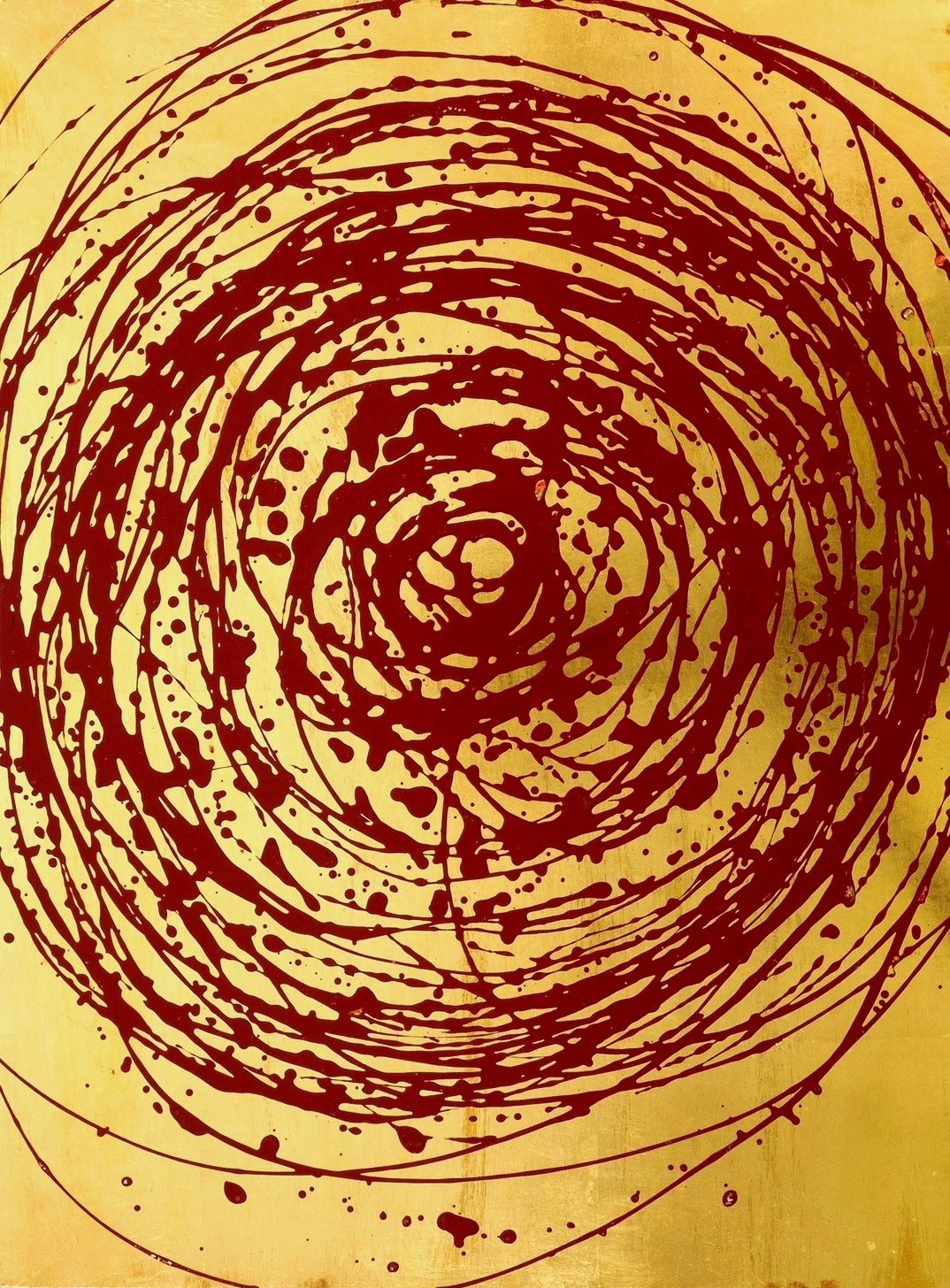
  • Manfred Luther – „Vom Uranfang an (Rote Spirale auf Gold)“
    Luther, Manfred. – Ab ovo. – Spirale. – „Vom Uranfang an (Rote Spirale auf Gold)”
  • Manfred Luther – „Blaue Spirale auf Weiß (I)“
    Luther, Manfred. – Ab ovo. – Spirale. – „Blaue Spirale auf Weiß (I)”
  • Manfred Luther – „Weiße Spirale auf Schwarz“
    Luther, Manfred. – Ab ovo. – Spirale. – „Weiße Spirale auf Schwarz”
  • Manfred Luther – „Schwarze Spirale auf Orange“
    Luther, Manfred. – Ab ovo. – Spirale. – „Schwarze Spirale auf Orange”
  • Manfred Luther – „Mutter Erde“
    Luther, Manfred. – Cogito ergo sum. – Scheibe. – „Mutter Erde”
  • Manfred Luther – „Ohne Titel (Rad, Mund, Falter & Maske I)“
    Luther, Manfred. – Improvisationen. – „Ohne Titel (Rad, Mund, Falter & Maske I)”
  • Manfred Luther – „Freut euch des Lebens II (Rad und gekrümmte Bahn)“
    Luther, Manfred. – Improvisationen. – „Freut euch des Lebens II (Rad und gekrümmte Bahn)”
  • Manfred Luther – „Ohne Titel (Rad, Baum & Krone I)“
    Luther, Manfred. – Improvisationen. – „Ohne Titel (Rad, Baum & Krone I)”
  • Manfred Luther – „Alles Vergängliche ist nur ein Gleichnis (Weinrot auf Schwarzblau)“
    Luther, Manfred. – Cogito ergo sum. – Scheibe. – „Alles Vergängliche ist nur ein Gleichnis (Weinrot auf Schwarzblau)”
  • Manfred Luther – „Zwei Dreiecke (Schwarz auf Rot)“
    Luther, Manfred. – „Zwei Dreiecke (Schwarz auf Rot)”
  • Manfred Luther – „Homo sapiens II“
    Luther, Manfred. – Gesichter. – „Homo sapiens II”
  • Manfred Luther – „Homo sapiens I“
    Luther, Manfred. – Gesichter. – „Homo sapiens I”
Manfred Luther

Manfred Luther

Details

Katalog

Catalogue

Böhlitz, Michael / Himmel, Anja (Hrsg.). – „Manfred Luther. Konkrete Meditationen”.

2024. Galerie Himmel (Eigenverlag), Dresden. – Ausstellungskatalog, von Manfred Luther. – 21 x 21 cm (Format).

8°, Broschur, 104 S., 47 Abb., 6 historische Fotografien. – Katalog zur Jubiläumsausstellung anlässlich des 20. Todesjahres ″Manfred Luther. Konkrete Meditationen″ in Kooperation mit dem Künstlernachlass in der Galerie Himmel in Dresden, 24.03.-08.06.2024. – Texte von Michael Böhlitz und Paul Kaiser. – Ausführlicher Katalogteil mit 45 bisher großenteils unveröffentlichten Werken des Künstlers aus allen Schaffensphasen von 1956 bis 1997. – Erstausgabe, neu.

VP 14.00 €

Order

Introduction

Manfred Luther is an exceptional figure in the recent art history of Dresden and, indeed, in East German Modernism as a whole. Intellectually, Luther sought a meta-synthesis of scientific knowledge from philosophy, mathematics and physics that would describe and interpret the world and its phenomena. He sought an appropriate artistic expression for this kind of theory of everything, in order to bring visual art and thought into harmony. In 1960/1961, he invented the concept of »Idee Konkrete Zeichnungen« (Concrete Drawings) and established a system of signs consisting of six basic geometric figures, which, due to its elementary validity, seemed suitable for conveying his philosophical theses, which culminate in the central statement: »All philosophical considerations begin with matter and end with matter«.

He developed his entire artistic oeuvre based on this paradigm of dematerialisation and objectification, beginning with the large-format »24 Tuschzeichnungen«, completed in 1968, which regularly combine the six basic figures. In the semiotic relationship between idea, sign and image, but also in terms of his aesthetics of reception, Manfred Luther achieves a quality with this idea that sets him apart from the realm of constructive- concrete art and identifies him as a precursor of conceptual art, which emerged somewhat later, primarily in the USA. His occasional reference to the fact that his pictures are »more about understanding than about pleasing« clearly gives priority to the idea over the form, a central feature of conceptual art.

In the non-conformist art of the GDR in the 1960s and 1970s, only A.R. Penck and Carlfriedrich Claus were as interested as Manfred Luther in the preposition of a philosophical concept, in a mutually interpenetrating unity of idea and image. A.R. Penck (1939–2017), who also developed his own sign system of pictograms, symbols and hieroglyphs with »Standart«. Carlfriedrich Claus (1930–1998), who drew on his psychological and linguistic-philosophical position to create the visual poetry of his »Sprachblaetter« which oscillate between calligraphy and (spiritual) landscape. Internationally, the return to the Bauhaus, De Stijl and the beginnings of constructivism from 1960 onwards was a defining phenomenon. Sol LeWitt (1928–2007), a pioneer of the American Minimal Art and Conceptual Art movements, produced print series from 1970 to 1985, relatively contemporaneous with Luther's »Combinations« and »Geometric Figures«, which were similarly conceived as unfoldings of reduced construction kits.

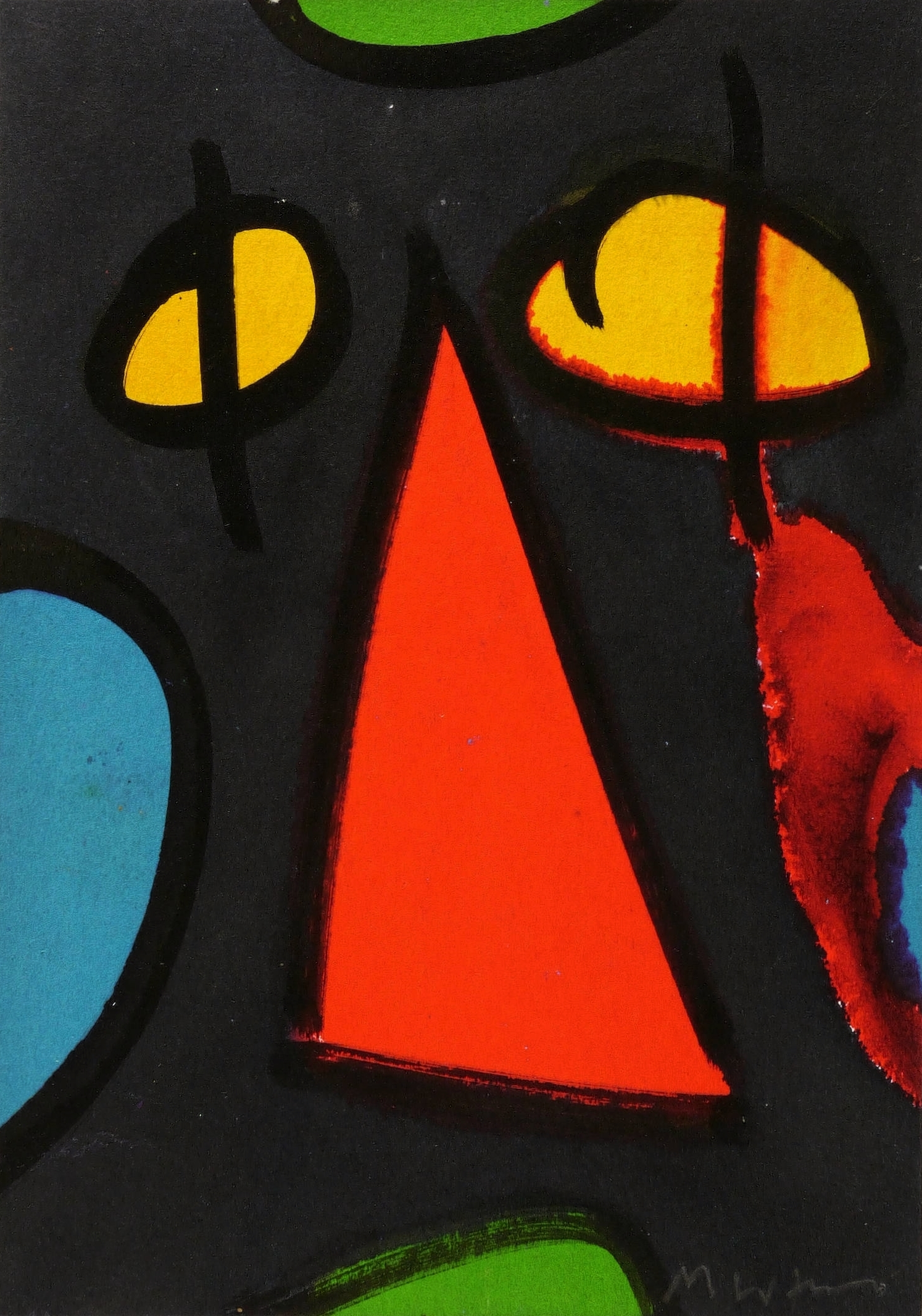
The exhibition aims to place Manfred Luther's personality and work more clearly in the context of conceptual art. Many of the unique and distinctive features of his artistic work, not least his striking special position within Dresden's constructivist- concrete art scene, become clear as a result. Entire parts of his oeuvre were, imperceptibly promoted by the previously accepted interpretation as a constructive-concrete position, in which, it should be conceded here, the artist himself played a significant role, literally marginalised or not noticed at all. Thus, groups of works, such as the stylised faces or the small-format »Improvisationen« were either not published at all or downplayed as early works.

Over the course of his life, Luther allowed himself to become increasingly open and expansive after the asceticism of the »24 Tuschzeichnungen«. While his desire for change and playfulness in the »Paraphrasen« of the 1970s still followed the strict laws of serial combinatorics, about a decade later it intensified in the spirals of the series »Ab ovo. Vom Uranfang an« to almost a reversal. The spiral images, freely dripped in lacquer paint, stand in stark contrast to the purist clarity and purity, to the constructed nature of the canon of forms with which the »Idee Konkrete Zeichnungen“ began, both in terms of painting technique, with the chaotic informality of the drip painting style, and in terms of perceptual aesthetics, with their vagueness and diffuseness.

The famous circular paintings of the 1980s and 1990s are often described as the late peak of the already mature artist's career. Conceptually, these paintings from the series »Cogito ergo sum« represent the culmination of his artistic vision, while their aura resembles that of icons. The iconic effect stems from a material aesthetic enhancement that is unparalleled in Manfred Luther's work. Despite the ever-same circular strokes on changing backgrounds, no other group of works displays such a strong individualisation, such an enhancement of beauty. The old notion that the outer form is secondary and must remain subordinate to content and idea is thrown to the wind here. The circles float transcendentally in an elaborately crafted, often preciously shimmering pictorial space.

Luther's works can be read as “meditations” in the sense of spiritual exercise, in the sense of a practice of reflection and contemplation. Their subject matter is spiritual in nature; it is thought itself. His artistic working method also sometimes bears the hallmarks of meditative practices: the rather inefficient, self- flagellating production of the »24 Tuschzeichnungen« by means of pen strokes laid over each other again and again in a relief- like manner. The combination of hundreds of variations and derivations from the kit of geometric figures. The constant repetition of certain meaningful pictorial objects and compositions. There are elements of contemplative immersion, of the harmony of emotion and reason, here of course with the aim of reflection, spiritualisation and increased insight.

However, when applied to Luther's art, ›meditation‹ also works in the opposite direction, focusing in a double sense on the viewer's intellectual effort. In this respect, we would like the title »Concrete Meditations« to be understood as an invitation to perceive Luther's art not only in its aesthetic form, but also to explore it in a comprehensible way.

However one may describe Manfred Luther's groups of works, which are comprehensively on display in this exhibition (...), the furore of his pictorial perception of the world remains palpable in everything. Manfred Luther's example demonstrates the fascinating experimental ease with which artists like him attempted to free themselves from an artistic era perceived as leaden and resisted corruption. His works, created within the narrow confines of the GDR art scene and conceived for larger contexts through pictorial transcendence, offer the potential for an open unfolding of their system of ideas and forms in a resonance space yet to be discovered.
Paul Kaiser
Manfred Luther. Konkrete Meditationen, Dresden: Galerie Himmel 2024, S. 22

On the 20th anniversary of his death on 11 January this year, Galerie Himmel is staging a particularly vivid, educational and mentally refreshing exhibition featuring Luther's major works, which is both art-historically significant and aesthetically stunning.
Heinz Weißflog
SAX, Ausgabe Juni 2024, S. 27