Introduction
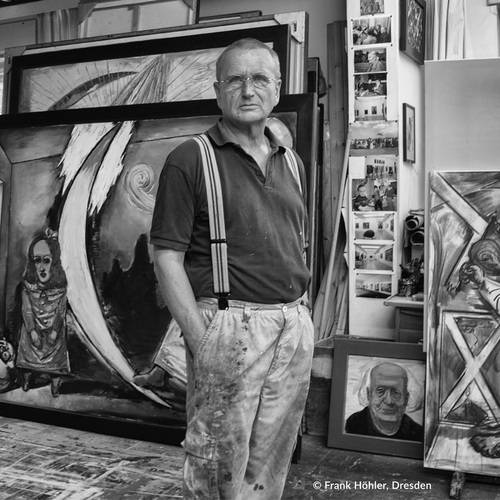
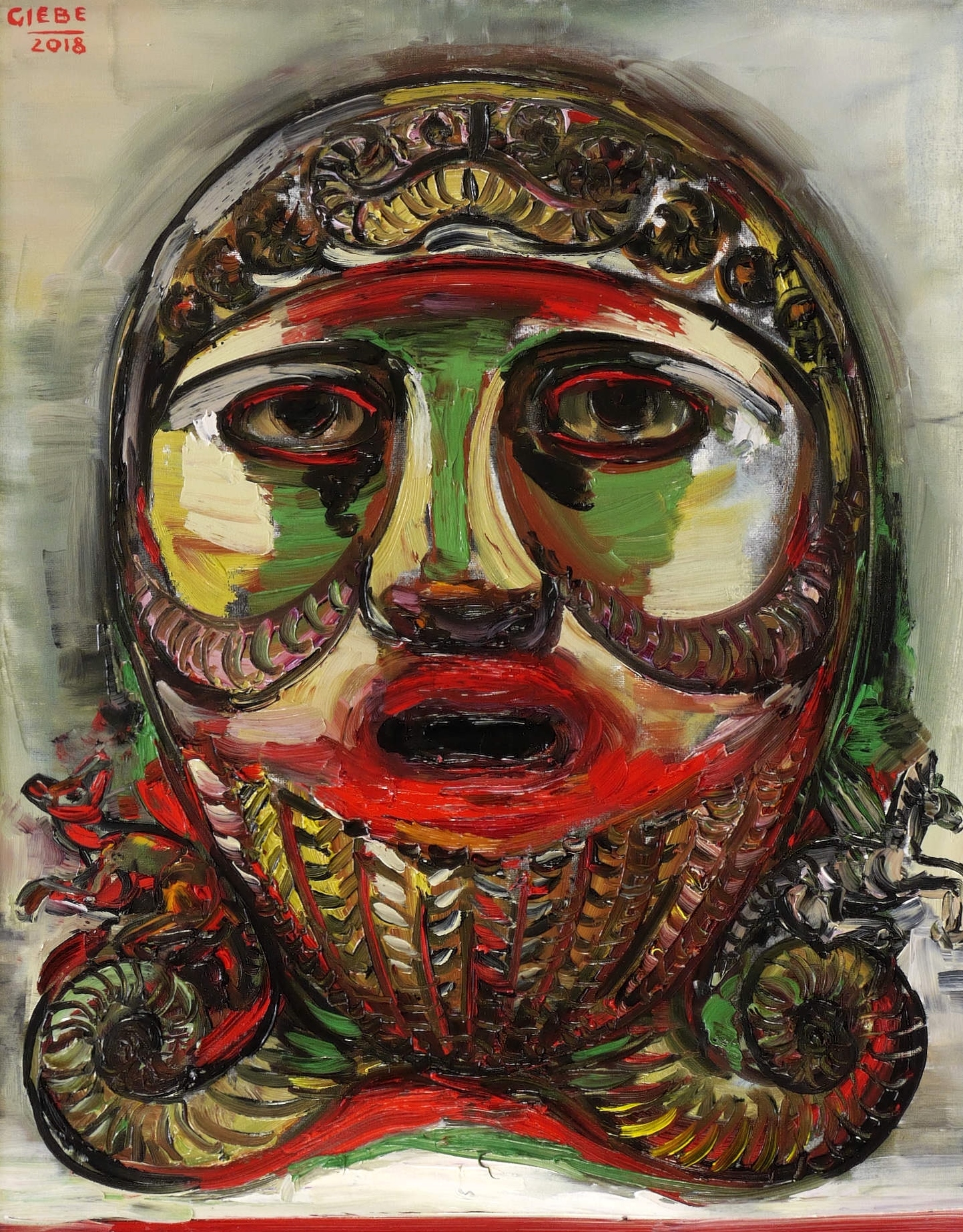
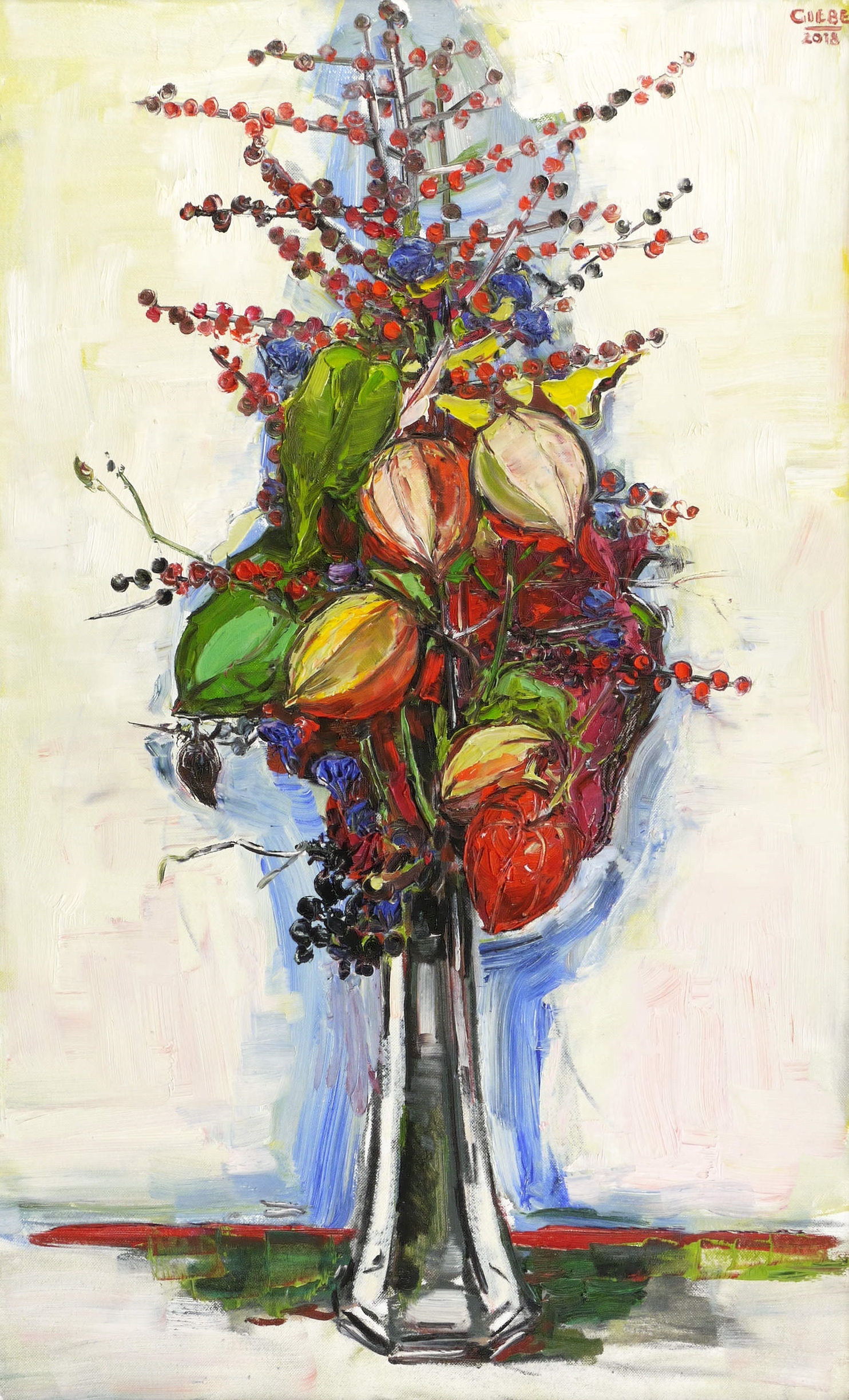
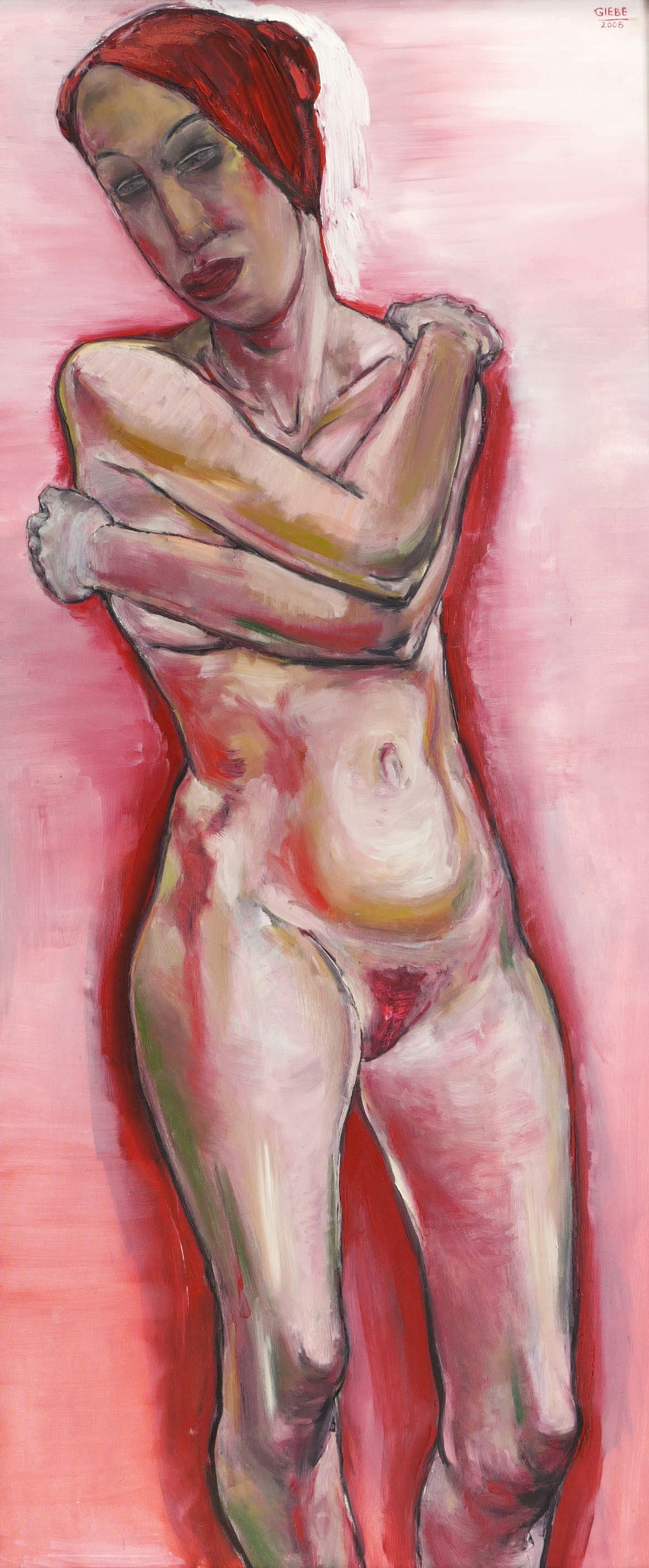
Hubertus Giebe, born in 1953, is one of the most important painters in Dresden today and one of the most important representatives of expressive figurative painting of the German post-war generation. He began studying at the age of sixteen, first in evening classes and then, from 1974, at the Dresden Academy of Fine Arts. In 1978, he graduated from the Academy of Visual Arts in Leipzig and became a master student of Bernhard Heisig. From 1979 to 1991, Hubertus Giebe taught at the Academy of Fine Arts in Dresden, most recently as a lecturer in painting and graphic art. Today, he works as a freelance artist. His work in the 1970s was still influenced by Neuen Sachlichkeit, with a coolly presented metropolitan realism, lonely, melancholic figures that were anything but a cheerful socialist illusion of the future. At the end of the 1970s, the isolated figures came together in dark and increasingly turbulent pictorial spaces, individual beings merged into a crowd of densely packed figures in a space now defined entirely by colour, which allows them to act and responds to their actions. Collective themes such as »guilt« or »threat« were treated in large-format tableaux by Giebe, whose art is always also a commitment to the great figurative traditions of painting history. He no longer uses realistic means of expression in his pictorial forms, but rather an expressiveness that elevates figure and colour in the picture to equal agents of action. Hubertus Giebe on himself and painting: »Using brush and paint to create a cosmos, binding colour and figure dramaturgy from nothing into stable forms, so that the world, the self and destiny are reflected in them, remains the old magic and longing of painting.« In large-scale figurative scenes, he tells of the abysses of a bizarrely changing time, of the constants and uncertainties of history, of the eternal theatre of the world between being and appearance, but of course also of self-discovery as an artist who has gone through epochs and systems. However, his plea is primarily to the pictorial itself, and this exhibition documents that with newer and, in some cases, never-before-seen works. Hubertus Giebe is a labourer of art and a combative defender of his profession, especially when people publicly talk about the end of painting. Then he passionately defends the great humanitarian mission that art has fulfilled not only since the Renaissance, but which has been renewed in every era and places an obligation on the artist, who is always only part of a chain that, coming from a great past, must not end in the here and now. Such is his commitment to artistic traditions such as the Renaissance or Expressionism, whose means of expression can be appropriated in order to learn from them and find a new, contemporary language. The search for artistic form is a human endeavour and has an impact across all cultures and all eras. To renounce it or consider it obsolete would be, for Hubertus Giebe, a profound loss of human substance.
Prof. Dr. Bernd Küster